Monday, February 25, 2019

Digital Marketing Campaigns: Winter 2018 Edition

It feels like the time has come for the Distilled Winter 2018 creative content round-up, which must mean – spring is on its way! So, without further ado…

Data Visualisations

A world of languages - Alberto Lucas Lopez

At school, the languages lessons offered to me were either French or German. Some more forward-thinking schools had Spanish in their curriculum. This graphic, by freelance data visualiser Alberto Lucas Lopez, puts into perspective how much more of the world is opened up to you if you know Spanish. If you want to be able to communicate with even more of the world population, then Chinese or Hindi would work in your favour. The presentation here, with the data shown in a circle, with the countries that speak these languages included by area based on population feels novel too, especially if you stretch your imagination to think of it as a globe.

The world through the eyes of the US - The Pudding

The Pudding has created some of my favourite data visualisations over the years. Originally their content focused on music, but now their scope has broadened. This chart looks at which countries have been talked about most in the New York Times each month since 1900. A grid of flags shows the beginning of the first world war, as mentions of Germany flood the headlines. In 1965, Vietnamese flags dominated, and from 2003, Iraq. The present day leans mainly towards China, followed by President Trump and the trade war.

Fiction Made Reality

7 Floor Plans of famous hotel rooms in film - Expedia

Ever wanted to step inside the hotel room you have seen in a movie? Expedia created Sims-like architectural sketches of the floor plans of seven famous hotel rooms from films, and in most cases offered a way of booking that very same room in real life. The attention to detail here is what makes it so cool – the tiger strolling casually through the apartment in The Hangover, down to the cutlery that was used on the tables – it’s making those magical scenes in your favourite films a livable reality.

Product Promotion

Free rides during Black History Month - Lyft

Lyft gave users one free ride during Black History Month to Black history museums, memorials, and relevant cultural sites. Promo codes for participating cities were given out in a blog post, along with possible destinations. Calling out the contributions of black women and men throughout history makes Lyft come across as forward-thinking and timely. It’s my guess that supporting communities like this improves brand sentiment with lasting effects.

Name a cockroach this Valentine's Day - Hemsley Conservation Centre

Enough brands focus on the lovey-dovey aspect of Valentine’s Day during this annual celebration of romance; Hemsley Conservation Centre’s campaign however stood out from the crowd by putting in place a stunt that helps you get back at your ex. Not that it is healthy to dwell on negative things in the past, but this tongue-in-cheek cockroach-naming service certainly makes revenge that little bit more sweeter, and all at the tiny price of £1.50.

Advertising

Gillette - The Best Men Can Be

In January, Gillette launched a new ad changing its strapline from ‘the best a man can get’ to ‘the best men can be’. Piggybacking off the #metoo movement, in this ad, Gillette challenge men to hold themselves accountable and to stop bullying, violence and sexual harassment. The ad received mixed opinions, I am in agreement with Bernice King (Martin Luther King’s daughter) who said, ‘This commercial isn’t anti-male. It’s pro-humanity’. Changing habits and mindsets is one of the hardest things to do, and I feel this was a courageous topic for Gillette to comment on.

Tools

Hey from the future - Ryder Damen

Advice from those older than us has been a successful format for us recently. For A Place For Mom, a senior care referral service in the US, we analysed over 100 news articles which gave advice from people over 100 on how to have a happy, healthy, and – most importantly – long life. Similar to this, Ryder Damen created a piece, offering advice to all ages from those older than them. At age 33, I quite agreed with mine.

Currency Converter 1270 - 2017 - The National Archives

Looking back as well as looking forward can often be a good basis for an idea. The National Archives have used their data to calculate modern day equivalents in the values of wool, horses, wheat and other tradable products from a year in the past of your choosing, based on the value of today’s money. For example £100 of today’s money would have brought me three horses in the 1920’s when my grandparents were born. Comparing today’s money to horses feels silly, as not that many people want to buy a horse, but it works as a concrete comparison to show how value has changed over the years.

Games

Praise or haze

In a world where it seems we’re often powerless to make a change with our opinions, especially those towards controversial leaders, something, anything we can do to get back at them even in a silly way to their often ridiculous statements feels empowering. This silly game allows you to ‘praise’ or ‘haze’ Donald Trump for things he has said. My personal favourite is when a large waterfall of wee is poured onto his head…I didn’t bother pressing the praise button.

Photo Stories

Dollar Street - Gap Minder

Gap Minder create free teaching materials to dismantle misconceptions and promote a fact-based worldview on cultural differences. The money other people is always a cause for intrigue, as we inevitably compare this to our own wealth. This piece, in particular, looks at the differences in monthly household earnings, and also even allows you to take a deeper dive into what basics, like fetching water, a refrigerator or cutlery look like in these countries.

At Distilled we have made similar stories ourselves with much success. In the video below Vicke and I talk about how you can reach people from all around the world using freelancer websites like UpWork to gather unique images and content.

What content have you enjoyed lately? Let us know in the comments.


Digital Marketing Campaigns: Winter 2018 Edition was originally posted by Internet Marketing

Can’t-Miss Sessions at 2019’s B2B Marketing Exchange Conference #B2BMX


Can’t-Miss Sessions at 2019’s B2B Marketing Exchange Conference #B2BMX was originally posted by Internet Marketing
Thursday, February 21, 2019

How B2B Marketers Can Win at Search with Best Answer Content

Winning Search with Best Answer Content

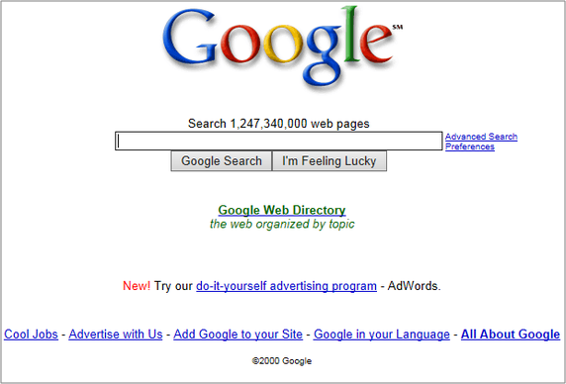
Winning Search with Best Answer ContentMarketers are engaged in a continuous battle to gain an edge when it comes to SEO, seeking those crucial advantages provided by top visibility where customers are looking. Multiple disciplines from technical SEO to creative content can be leveraged to win the search marketing game. At TopRank Marketing, we believe the best answer to this quandary is… well, to be the Best Answer. To simplify and clarify, it might be helpful to take a step back. In October of 2000, Larry Page laid out his ambitious vision for Google, a company he’d founded along with Sergey Brin just two years earlier. Page foresaw his creation as “the ultimate search engine that would understand everything on the Web. It would understand exactly what you wanted, and it would give you the right thing.” “We’re nowhere near doing that now,” he admitted. “However, we can get incrementally closer to that, and that is basically what we work on.” At the time, here’s what the Google homepage looked liked (prepare for nostalgia shock in 3… 2… 1…): Fast-forward almost 20 years. Google’s interface looks decidedly more modern and its functionality is now much closer to what Page envisioned. Through artificial intelligence, machine learning, and sophisticated algorithms, the search engine is amazingly adept at understanding a searcher’s intent and motives. And digital marketers are just out here trying to keep pace.

The Answer Machine

Back in the day, we had these wacky contraptions called “answering machines,” which hooked up to “landline phones” (!) and recorded messages on little cassette tapes (!!) when calls were missed. This precursor to the voicemail now seems prehistoric — a sign of the speed at which technology is advancing. In 2019, answering machines are mostly gone, but the digital “answer machine” is a staple of everyday life for many of us. In fact, Google’s brand name itself is now used as a verb, describing the act of asking the internet a question. Input query and receive answers, in order of relevance. Bleep, bloop. Our hunger for knowledge is insatiable: Google processes 35,000 searches per second, and 3.5 billion each day. With this kind of volume, the high end of a search engine results page (SERP) is critical real estate; one study found that the top position gets one-third of all search traffic on average. So it’s easy to see why SEO has become a cornerstone of marketing strategies everywhere. At TopRank Marketing, we talk often about gaining this coveted visibility by being the best answer for customers, and how to achieve it through deep, comprehensive, high-quality content. But before a brand can go about creating best answers, it must determine which crucial curiosities it wants to satisfy. Herein lies the key to developing a search marketing approach that integrates with a customer-centric strategy.

Hearing Your Customer’s Voice

In many ways, the advent of voice search really crystallizes Google’s function as an answer machine (or “answer engine” as our CEO Lee Odden has put it). ComScore predicted a while back that by 2020, more than 50% of searches would be conducted by voice, and suddenly that’s less than a year away. This fast-rising trend strengthens the wisdom of a “best answer” strategy for two primary reasons:
  1. Featured snippets (aka “answer boxes”) are gaining more prominence as the default result delivered by a voice search. These excerpts are deemed by Google to be the “best answer” for a particular query, based on various factors.  
  2. We’re moving toward a more literal question/answer format with search, because while people might type a string of keywords to research a particular topic (“best answer seo strategy digital marketing”), they tend to be more colloquial when speaking to a voice-search device (“What does a best answer SEO strategy mean for digital marketers?”).
Structuring SEO around conversational keywords is nothing new. As we wrote here on the TopRank Marketing Blog a couple of years ago:
Google has been encouraging this type of behavior for years, especially with the Hummingbird update back in 2013. People communicate with conversations, not just keywords. Associating the right keywords with concepts helps the overall content quality as opposed to targeting only one or a couple keywords per page.
In other words, you want to address not just a specific keyword with your content, but rather the breadth of what someone is trying to learn when they search for that keyword. And so, search marketing today is less about building traditional keyword lists, and more about using those lists – along with other resources – to make deductions about which questions your customers (and potential customers) are asking. Your findings should become the foundational basis for both organic and paid strategy. Unfortunately, no machine will serve up a quick-and-easy answer in this case. It’ll take meticulous research and deep insight about your audience. Let’s walk through that process a little to set you on the right path.

How to Identify Best Answer Opportunities

Here are a few tactics for making confident determinations about the burning questions you want to answer for your customers

Reverse-Engineer Keyword Data

Marketers have a wealth of SEO data at their fingertips, and can use this information as breadcrumbs tracing back to a user’s starting point. Dig into Google Search Console to learn which queries are bringing people to your site and how many people are clicking through from particular searches. Instead of simply parsing out keywords, seek patterns and greater meaning in this data. What is it telling you about the mindset of searchers who end up on your page? By connecting search terms to pages on your site, you can get a better idea of the intent behind them (e.g., searches that are bringing people to solutions pages likely represent a more advanced stage of research).

Use the “People Also Asked” Feature in Google

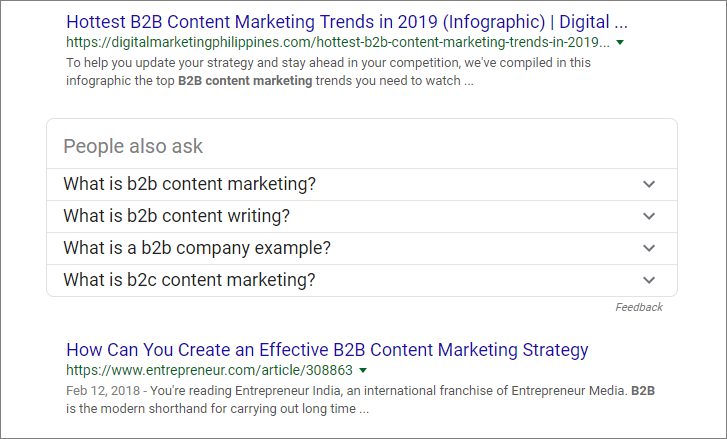
I love this little feature. When you run a search, Google will often serve up a list of related questions, and these can be extremely helpful when it comes to building out your best answer content. If you want to create an authoritative resource on the topic you’re targeting, chances are you’ll want to account for each of these tangential queries in some way.

Leverage Schema Markup

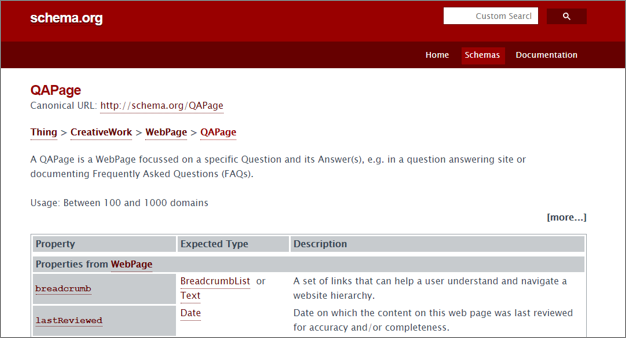
Schema structured data helps search engines (and their users) understand the purpose of a page, and the questions it is trying to answer. Adding these tags to your source code enables a SERP to display rich snippets that are directly relevant to a searcher’s query. Why is this so powerful and relevant? Last summer Google confirmed that it had been testing a new featured snippets in the form of FAQs, Q&A, and How-tos. And as it turns out, Schema.org has a lot of this markup readily available.

Rely on the Right Tools

There are three in particular that I like to use for this type of research:
  • SEMrush: Awesome SEO tool that shows real-time keyword volumes and (more importantly in this case) “Phrase Match Keywords” and “Related Keywords, which can lead you down other branching paths for that search journey. The Keyword Magic tool is very helpful for finding question keywords.
  • BuzzSumo: A great site for finding trends around any topic or keyword. In particular, I recommend using its Question Analyzer function, which is perfectly suited for the purpose at hand. This enables you to identify questions being asked on Q&A sites or forums, clustered by topics.
  • AnswerThePublic: The “auto suggest” feature in Google is similar in function to “People Also Asked,” but can provide more extensive insight. AnswerThePublic helpfully takes these snippets and turns them into conversational keywords, delivering a “question wheel” of longtail inquiries stemming from that term.
Example of an AnswerThePublic “question wheel”

Go In-Depth with Marketing Attribution Models

Multi-touch attribution is not easy to master, but those marketers who gain proficiency are able to tap into key buyer signals. When you follow the string backward on a purchase someone made, identifying touch points along the way, you can learn a great deal about the questions they asked and the content they consumed to reach that decision.   As you start to gain a better grasp of the searches that carry clear commercial intent, you can begin to situate your PPC strategy around them. Those are usually the clicks worth paying for.

Search for Whitespace in SERPs

Not every priority question for your audience will be worth attacking. Make honest assessments about the existing search results for certain terms. If another company (or, in many cases, Wikipedia) is already owning the answer box with a stellar page, you may want to turn your attention elsewhere or at least push it to the back burner. The sweet spot is when you can find popular questions among your audience that aren’t already being definitively covered. This also applies to paid keywords with lower competition. Those are the gaps you want to fill with your best answer strategy. As your site gains authority and backlinks, you may find it easier to topple some of the entrenched leaders for other high-volume queries and higher-cost keywords.

Break Down Questions and Build Up Best Answers

The late businessman Arnold Glasow once said, “It’s easier to see both sides of a question than the answer.” Very true. When marketers make the effort to see every side of the questions their customers are asking, we can see the bigger picture and craft content to fully satisfy the extent of a searcher’s interest. At TopRank Marketing, we’ve built our search marketing philosophies around this belief. Google has come a long way since its early days, and our approach to working with it must evolve in kind. In the age of RankBrain, you’re not going to game this ultimate search engine through keyword-stuffing or other gimmicks. Google is continually getting better at understanding exactly what a searcher wants and giving them the right thing. If we want to be that “right thing,” we also need to understand exactly what our customers want, and we need to deliver it.   To paraphrase the great Ricky Bobby: If you’re not best, you’re last. via GIPHY Want to learn more about TopRank Marketing’s take on modern search marketing? Go ahead and peruse our SEO service page.

How B2B Marketers Can Win at Search with Best Answer Content was originally posted by Internet Marketing
Wednesday, February 20, 2019

The Easiest Tool for Testing Page Speed - PageSpeed Insights API

In November 2018, Google released an updated PageSpeed Insights API, which provides performance reports from both lab and field data on a page. Using the PageSpeed Insights API, we can test multiple URLs at once to get a better idea of our site’s overall performance and identify areas of our site that can be optimized for speed. To do this, I wrote a script that uses the new PageSpeed Insights API to retrieve performance data and print the results in a Google Sheet—the easiest and quickest way to get an overview of your site’s speed using a sample of pages.

Before you follow optimization recommendations from PageSpeed Insights, it’s important to note that the tool often recommends actions that won’t improve user experience or provide a worthwhile performance increase for your specific site. For example, PageSpeed Insights may advise caching external files (e.g. requests to Facebook.com) or serving images in  WebP format, a file type that is not supported across all browsers. It’s important to consider the nuances of your site and your end users when looking at PageSpeed’s recommendations and determining if you should put them into action—look for the biggest payoffs that won’t negatively impact your site’s UX.

Get the started by making a copy of the worksheet.
Access for free.

How to use the script

The script is configured to test for mobile performance.

  1. First, you’ll want to create a copy of the sheet. Open up the sheet, and click “File” and then “Make a Copy”

  1. Enter a list of URLs you want to test in Column A on the “InputData” tab

  2. Click the “Page Speed” menu item, and then click “Get Page Speed” from the drop-down to execute the script for the list of URLs in Column A

  • The first time you run the script, you will be prompted by Google to authorize the request:

  1. When the script finishes executing (which could take a number of minutes depending on how many URLs you entered), the results will be printed on the tab “PageSpeedResults”

  • If a cell is left blank, that means that item is already optimized on that page.

Response Data

There are 17 columns on the PageSpeedResults tab. The first column contains the URL tested, and the following 16 columns contain the results of the performance tests. The “Performance Score” is an overall rating of your site’s speed performance, with a .1 indicating a slow site and a .9 a fast site. The last column contains a link to the full Pagespeed Lighthouse Report, where you can view all the result data.

What are your favorite metrics to look at when testing page speed? Leave us a comment below or tweet us @distilled.


The Easiest Tool for Testing Page Speed - PageSpeed Insights API was originally posted by Internet Marketing
Tuesday, February 19, 2019

Why Always-On Is Always Better for Driving B2B Influencer Marketing Success

Show of hands: How many of us brush our teeth at least twice a day? All of us? Great. Now, a follow up question: Why? The reasons are numerous, right? We care about maintaining our hygiene on a daily basis. We want to keep our smiles bright. We need to defend against offensive bad breath. We want to ensure the long-term health of our teeth, gums, and mouths. And, mostly, we want to successfully avoid pricey and painful dental work now and in the future. via GIPHY The moral here? With consistency and commitment we reap both short- and long-term benefits—and avoid a whole lot of pain. And the same is true when it comes to B2B influencer marketing. As we like to say of consistency and commitment in marketing: “Always-on is always better.” However, most B2B marketers aren’t brushing as often as they should when it comes to influencer marketing. In fact, roughly 11% of B2B influencer marketing programs are ongoing. To put this into perspective, 48% of B2C influencer marketing programs are ongoing. From building lasting relationships to enabling marketing scalability, an always-on approach to working with influencers is always, always, always better in our experience for several reasons. Today, we explore three of those reasons with the help of seasoned influencer marketing leaders at B2B brands.

#1 - Strong relationships are at the root of influencer marketing success—and relationships aren’t built in a day.

At its core, influencer marketing is all about brands engaging and developing relationships with individuals—individuals who have relevant topical expertise, reach, and resonance that aligns with the goals of the brand. “It’s really about building a relationship that brings value to both parties,” Amisha Gandhi, Vice President of Influencer Marketing for SAP Ariba*, told us not long ago. “Companies should approach influencers as partners, not just as people that they can use for their marketing efforts and launches.” [bctt tweet="Companies should approach influencers as partners, not just as people that they can use for their marketing efforts and launches. - @AmishaGandhi #B2BInfluencerMarketing" username="toprank"] However, strong, long-lasting relationships aren’t built overnight, rather they’re sewed over time. Success with influencer content is so much more than including a few famous people in a listicle post or quote roundup,” our own CEO Lee Odden says. “Competition for influencers is growing fast and there are only so many top influencers in each industry. It’s essential to create relationships now, long before you need to activate them.” [bctt tweet="It’s essential to create influencer relationships now, long before you need to activate them. - @leeodden #B2BInfluencerMarketing" username="toprank"] And as that demand for working with influencers increases, it will become more and more difficult to capture and hold their attention. By committing now to always-on relationship building and collaboration, every party can “come out ahead,” as Rani Mani, Head of Influencer Social Enablement at Adobe*, told us in a recent interview. “We at Adobe pride ourselves on cultivating and nurturing long-term relationships with our influencers,” she shares. “We look at it as dating with an eye towards long-term commitment, which means we are always looking to establish a ‘give-to-get’ exchange where all parties come out ahead.” [bctt tweet="We look at influencer relationships as dating with an eye towards long-term commitment, which means we are always looking to establish a ‘give-to-get’ exchange where all parties come out ahead. - @ranimani0707 #B2BInfluencerMarketing" username="toprank"] And before your start to feel overwhelmed by the prospect of ongoing influencer nurturing and relationship building, don’t worry. Yes. It takes work. But by making it part of your integrated marketing strategy, you’ll have an opportunity to hone in on the specific characteristics and people who are the best matches for your brand. “We used to think quantity was the key to everything,” Angela Lipscomb, Influencer Relations Manager for SAS, told us. “Now it is much more about quality over quantity. So, we’ve scaled back the scope of our engagement activities to focus on developing collaborative relationships with fewer individuals. That means that sometimes we focus on influencers who may not have the largest reach, but have greater engagement and subject-matter authority and the ability to inspire.” [bctt tweet="We used to think quantity was the key to everything. Now it is much more about quality over quantity. - @AngelaLipscomb #B2BInfluencerMarketing" username="toprank"]

#2 - Influencers can be an extension of your content marketing team.

Content is the strategic foundation of marketing. Period. But marketers frequently cite that consistently creating strategic, quality, engaging content is a top marketing challenge. However, with an army of influential voices—an army that you’ve carefully cultivated and nurtured over time—you have a band of partners who can be an extension of your in-house content marketing team. In addition, by co-creating content with influencers on a regular basis, you give influential experts with a steady medium to share valuable expertise and perspectives, as well as provide your audience a drumbeat of influential, insightful, on-brand content. “Partnering with an influencer allows you to highlight your brand’s own existing narrative in a new way, so that you can reinforce the proof points you really want your customers to know,” Whitney Magnuson, Global Head of Social Media and Influencer Programs for IBM, told us not long ago. [bctt tweet="Partnering with an influencer allows you to highlight your brand’s own existing narrative in a new way. - @whitneymagnuson #B2BInfluencerMarketing" username="toprank"] Oh, and you can fill your editorial calendar, add flavor to your content campaigns, extend your audience reach—and the list goes on. And as Lee has said: “For any kind of content a business creates and publishes to the world, there is an opportunity for collaboration with credible voices that have active networks interested in what those voices have to say.”

#3 - An always-on commitment to influencer marketing helps you refine, evolve, and scale your marketing efforts.

Marketers are in the business of driving results, which means we’re constantly reviewing our tactical mix and strategic priorities. This constant vigilance helps us grow in marketing sophistication so we can drive success at scale. Simply put, we don’t set and forget—we optimize and evolve our approach to achieve success. But with just one-tenth of B2B influencer programs falling in the “ongoing” bucket … there’s immense opportunity for improvement and alignment. As Dr. Konnie Alex, Head of Corporate Influencer Relations for Dell*, shared with us: “A sophisticated influencer program doesn’t rely on a single identification method or one-time vetting process to start and maintain a relationship with an influencer, but rather develops a scorecard that gets constantly reviewed and, most importantly, evolves as this emerging field matures. At this point, we review strategy, methods, tactics, and measurement on an ongoing basis.” Konnie also said: “We have a number of strategic partners who never stop evolving or expanding their expertise. We value them highly and feel that they represent a reflection of our brand’s values and long-term vision.” [bctt tweet="A sophisticated influencer program doesn’t rely on a single identification method or one-time vetting process to start and maintain a relationship with an influencer. It develops and evolves. - @konstanze #B2BInfluencerMarketing" username="toprank"] Speaking of long-term, an always-on approach to influencer marketing can help you strengthen all your other marketing efforts. How? For one, you can keep a pulse on your evolving audience. “Strategic partnerships with influencers provide for an outside-in view when creating content for our customers,” Konnie said. “We need to constantly ensure that, as a brand, we don’t start talking to ourselves, but keep a keen focus on the evolving challenges our customers have and on the language they use to express these challenges.” And secondly, you can create better experiences that lead to real results. With influencer marketing, you’re looking to offer a better experience to your customers and deliver knowledge-based educational content with a third-party voice,” Amisha shared. “These experiences can be achieved through content, influencers speaking directly to customers, nurturing them through digital and high value assets. This approach with influencers will help you to drive sales journey and demonstrate pipeline touch.”

Smile for Always-On B2B Influencer Marketing

While many B2B brands are still cutting their teeth on influencer marketing, success and sophistication are rooted in giving the practice constant attention and care. This commitment will not only help you grow lasting relationships with influential leaders in your industry, but also enable consistent, quality content creation and make a scalable impact on your overall marketing strategy. Looking for more inspiration? Check out these five examples of B2B influencer marketing in action. *Disclaimer: SAP, Adobe, and Dell are TopRank Marketing clients.

Why Always-On Is Always Better for Driving B2B Influencer Marketing Success was originally posted by Internet Marketing